
What Season Is May in China? Calendar and Regional Context
May is meteorological spring in China, but local weather ranges from cool northern conditions to…
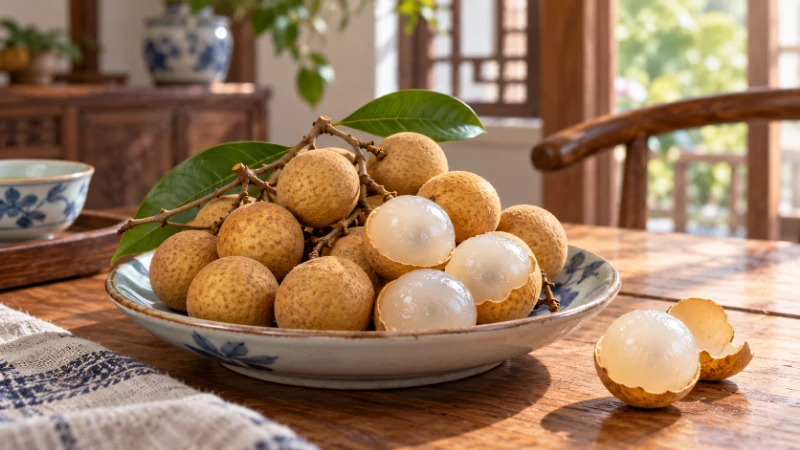
Read More →White Dew customs include eating longan in Fuzhou, Fujian, and a preference for White Dew tea in Nanjing, Jiangsu, as reported by the regional culture account cited below. These are local food practices, not medical treatments.
White Dew, Bailu (白露), is an autumn solar term whose name evokes dew visible on vegetation. In 2026 it falls on September 7 in Hong Kong Time (UTC+8), at a solar longitude of 165°.
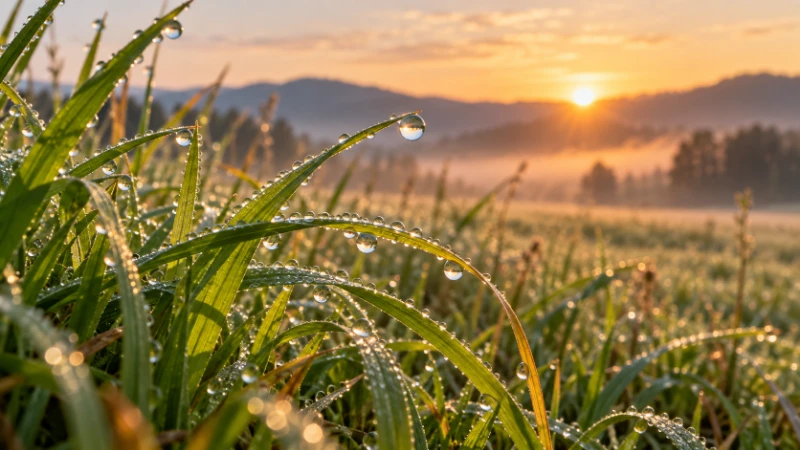
White Dew precedes the Autumn Equinox and Cold Dew. Dew is liquid water, not frost. Its presence depends on local surface cooling and moisture rather than the calendar name alone.
| Chinese name | Bailu (白露) |
|---|---|
| Solar longitude | 165° |
| 2026 date | September 7, Hong Kong Time (UTC+8) |
| Adjacent terms | End of Heat → White Dew → Autumn Equinox |
A People’s Daily culture feature attributes eating longan to Fuzhou, Fujian, and a preference for White Dew tea to Nanjing, Jiangsu. These named examples should remain regional.
The seasonal word “autumn” here follows the traditional Northern Hemisphere calendar. The Hong Kong Observatory relates many term names to ancient central Chinese weather and agriculture. Local weather and plant development may differ; Southern Hemisphere seasonal timing is reversed.
The feature includes traditional health claims. This article uses it only to identify food practices and places, and does not repeat claims about treating disease or nourishing organs.
Regional example source: read the named account. The account supports the place and practice stated above, not medical benefits or a national rule.
Hong Kong Observatory: term names and solar longitudes; 2026 Gregorian–lunar conversion table; date and time notes (Hong Kong Time, UTC+8). The calendar sources establish astronomical timing and terminology; they do not verify regional customs.
September 7 in Hong Kong Time (UTC+8). The solar-term boundary is at 165° solar longitude; civil dates in other timezones can differ.
No. Customs require place-specific sources and vary between communities and households. The astronomical calendar does not establish a national food or ritual rule.
May is meteorological spring in China, but local weather ranges from cool northern conditions to…
Read More →
Understand winter in China by month and region, from snowy northeast cities to mild southern…
Read More →
China has no single monsoon month. Compare South China, the Yangtze Meiyu belt, North China,…
Read More →