
What Season Is May in China? Calendar and Regional Context
May is meteorological spring in China, but local weather ranges from cool northern conditions to…
Read More →Beginning of Autumn, Liqiu (立秋), marks the beginning of autumn in the traditional Chinese seasonal division. In 2026 it falls on August 7 in Hong Kong Time (UTC+8), at a solar longitude of 135°.
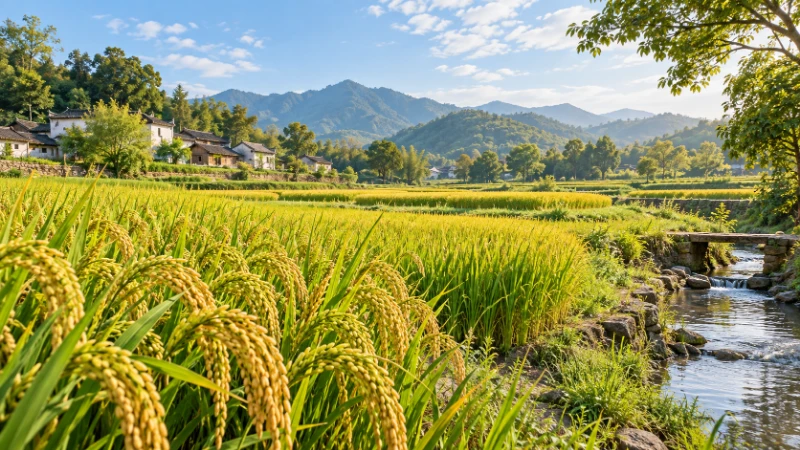
Liqiu is not the September equinox, and it does not mean summer heat ends immediately. The next term is End of Heat, while the Autumn Equinox comes later.
| Chinese name | Liqiu (立秋) |
|---|---|
| Solar longitude | 135° |
| 2026 date | August 7, Hong Kong Time (UTC+8) |
| Adjacent terms | Great Heat → Beginning of Autumn → End of Heat |
A food custom such as eating particular meats or melons needs a regional account. The calendar definition does not justify claiming that everyone should gain weight in autumn.
The seasonal word “autumn” here follows the traditional Northern Hemisphere calendar. The Hong Kong Observatory relates many term names to ancient central Chinese weather and agriculture. Local weather and plant development may differ; Southern Hemisphere seasonal timing is reversed.

Use Liqiu to compare local temperature and plant development with a named calendar point. Harvest stages differ by crop and region, and a warm August observation is not a contradiction of the astronomical date.
Hong Kong Observatory: term names and solar longitudes; 2026 Gregorian–lunar conversion table; date and time notes (Hong Kong Time, UTC+8). The calendar sources establish astronomical timing and terminology; they do not verify regional customs.
August 7 in Hong Kong Time (UTC+8). The solar-term boundary is at 135° solar longitude; civil dates in other timezones can differ.
No. The term is defined astronomically. Its seasonal name does not establish the temperature, rainfall or snowfall at a particular location.
May is meteorological spring in China, but local weather ranges from cool northern conditions to…
Read More →
Understand winter in China by month and region, from snowy northeast cities to mild southern…
Read More →
China has no single monsoon month. Compare South China, the Yangtze Meiyu belt, North China,…
Read More →