
What Season Is May in China? Calendar and Regional Context
May is meteorological spring in China, but local weather ranges from cool northern conditions to…
Read More →
Traditional Chinese seasonal health is a practical way to understand how the 24 Chinese solar terms connect seasonal change, traditional calendar wisdom, and everyday life.
Designed for overseas culture learners, parents, and teachers, this guide breaks down how each of the 24 solar terms shapes daily health practices, with actionable tips to adapt these time-tested methods to modern life. You’ll learn to balance diet and activity with seasonal shifts, avoid common beginner mistakes, and discover how ancient wisdom translates to simple, sustainable health habits today.
The 24 solar terms are a precise calendar system developed over 2,000 years ago in China, dividing the tropical year (365.24 days) into 24 equal 15-day periods based on the sun’s position in the ecliptic. Each term marks a distinct shift in climate, natural phenomena, or agricultural activity, and traditional Chinese seasonal health is built around aligning the body with these shifts.
The full list of terms is: Start of Spring, Rain Water, Awakening of Insects, Spring Equinox, Clear and Bright, Grain Rain, Start of Summer, Grain Buds, Grain in Ear, Summer Solstice, Minor Heat, Major Heat, Start of Autumn, End of Heat, White Dew, Autumn Equinox, Cold Dew, Frost’s Descent, Start of Winter, Minor Snow, Major Snow, Winter Solstice, Minor Cold, Major Cold. Unlike Western seasons, which are broad, these terms offer granular, daily guidance for health—making them accessible even to those new to Chinese culture.
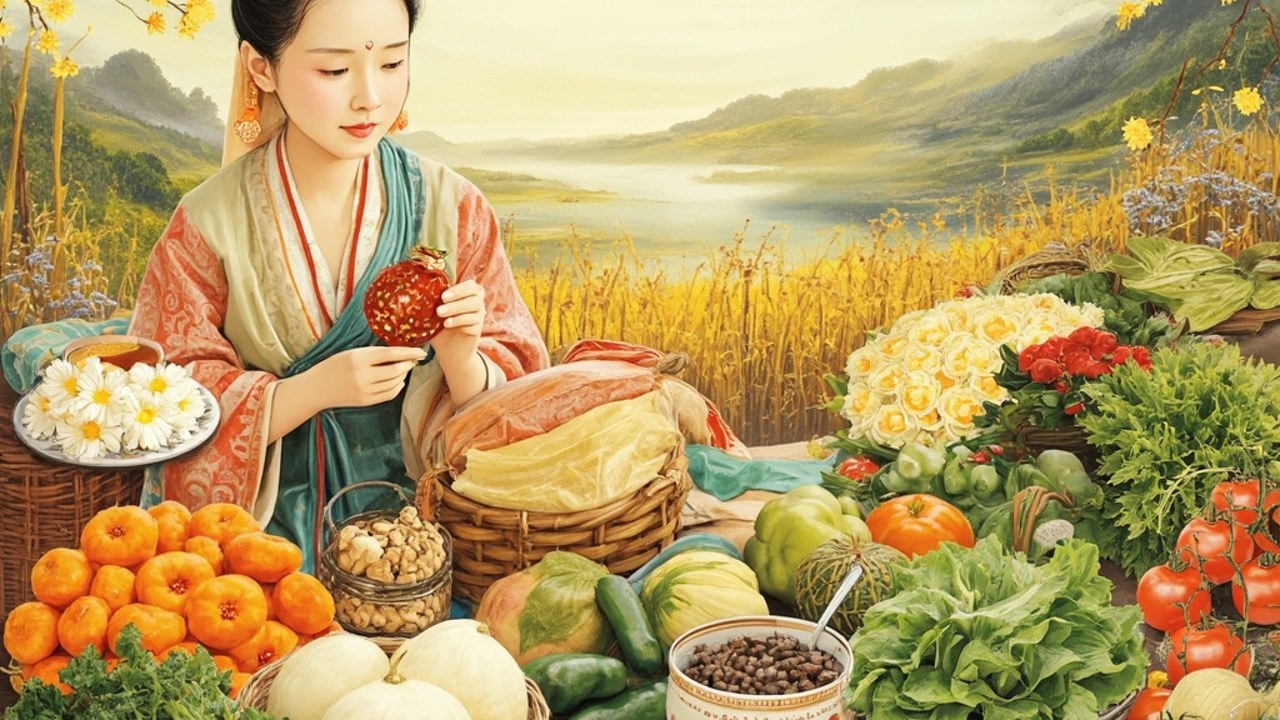
At the heart of traditional Chinese seasonal health is the concept of Yin-Yang balance, a core principle of traditional Chinese medicine (TCM). Yin represents cool, moist, and restful energy, while Yang stands for warm, active, and energizing energy.
The goal is to adjust daily habits to maintain this balance as the seasons change. For example, during the hot, Yang-dominated summer, overexertion or heavy, greasy foods can tip the balance toward excess Yang, leading to heatstroke or digestive issues.
Conversely, in the cold, Yin-heavy winter, neglecting to nourish Yang can result in fatigue or weakened immunity. A key expert tip for beginners: avoid extreme changes.
“Many new practitioners either overdo cold foods in summer or pile on heavy meats in winter,” says TCM practitioner Dr. Li Mei, “but gentle adjustment—like adding a cup of mint tea on a hot day or a small portion of lamb in winter—is far more effective than extremes.”
Spring, a season of renewal, is tied to liver health in TCM, so traditional Chinese seasonal health practices here focus on supporting the liver and waking the body from winter’s rest. The first term, Start of Spring (lichun), falls around February 3–5.
A common practice is to eat sour foods like plums or hawthorns to nourish the liver and stimulate digestion. For teachers, this could mean adding a small bowl of dried hawthorns to classroom snack times to keep students energized without overstimulating them.
Next, Rain Water (yushui, February 18–20) brings increased dampness, which can lead to sluggishness. Traditional advice includes eating foods like coix seed (job’s tears) and red beans to reduce internal dampness—perfect for busy parents who can cook a simple pot of coix seed and red bean soup on weekends.
Awakening of Insects (jingzhe, March 5–7) marks the time when hibernating insects wake, and TCM suggests getting 10–15 minutes of morning sun to regulate the body’s internal clock, an easy habit for anyone to adopt. For more spring-focused health tips, check our guide to spring health practices.
Summer is the season of maximum Yang energy, so traditional Chinese seasonal health here focuses on cooling the body and preventing heat-related issues. The Summer Solstice (xiazhi, June 21–22) is the longest day of the year, and TCM advises avoiding midday sun exposure (11 AM to 1 PM) when Yang is at its peak.
Instead, take a short rest or drink herbal tea like chrysanthemum or mint to cool the body. Minor Heat (xiaoshu, July 6–8) and Major Heat (dashu, July 22–24) are the hottest periods, so light, hydrating foods are key.
A traditional dish is mung bean congee—easy to make, with mung beans that clear internal heat and rice that nourishes the stomach. For example, a parent can prepare this congee for their family on scorching afternoons, replacing heavy meals that can weigh the body down.
A common mistake here is drinking too much iced water, which can damage the digestive system. “Room-temperature water or herbal tea is better for maintaining balance,” Dr.
Mei notes.
Autumn brings dryness, so traditional Chinese seasonal health practices focus on moistening the body to prevent dry skin, coughs, or sore throats. White Dew (bailu, September 7–9) marks the start of this dry period, and eating pears—either fresh or steamed with rock sugar—is a classic remedy.
For teachers, this could mean suggesting pear slices as a healthy snack for students. Frost’s Descent (shuangjiang, October 23–24) is when the first frost often appears, so it’s important to protect the neck and feet from cold—simple advice that anyone can follow.
Winter, the season of maximum Yin, is about nourishing Yang to build energy for the next year. The Winter Solstice (dongzhi, December 21–22) is a key day here, with a custom in northern China to eat lamb soup, which warms the body and boosts Yang.
A common expert tip: don’t skip winter nourishment. “Many people think winter is a time to rest, but it’s actually the foundation for spring health,” Dr.
Mei says. “Neglecting it can lead to persistent fatigue in March or April.” You can learn more about winter-specific care in our winter health advice resource.
One of the most valuable aspects of traditional Chinese seasonal health is its flexibility—you don’t need to follow strict rituals to benefit. For overseas readers, this means small, manageable changes rather than complex practices.
For example, on Start of Spring, add a few sour berries to your morning oatmeal; on Winter Solstice, make a simple lamb soup (or a vegetarian version with mushrooms) for dinner. For parents, this could mean planning a weekly menu that aligns with seasonal terms—like adding red bean soup on Rain Water day or pear slices on White Dew.
For teachers, it’s easy to incorporate short, nature-aligned activities: a 10-minute tai chi break on Start of Spring or a discussion about seasonal foods with students. This adaptability makes traditional Chinese seasonal health relevant for anyone, regardless of their background, helping them connect with nature and support their well-being throughout the year.
Even for those who don’t follow TCM principles, the core idea of aligning daily habits with natural rhythms is universal—something that’s easy to integrate into busy modern lives, no matter where you live.
Traditional Chinese Seasonal Health is not only a date on the calendar. In Chinese seasonal culture, it is a way to connect family routines, food choices, weather awareness, and traditional memory.
People often understand a festival or seasonal custom by looking at what families prepare, what they eat, what they avoid, and what ideas they pass to children.
For readers outside China, traditional Chinese seasonal health can be understood as a practical cultural window. It shows how the traditional calendar joins agriculture, family reunion, health ideas, and symbolic customs.
Even when modern families no longer follow every old practice, many people still keep the most meaningful parts because they create rhythm in the year.
The most useful way to study traditional Chinese seasonal health is to ask three questions: What does this date mark in the seasonal cycle? What do people actually do at home or in public life?
Why did those customs become meaningful? These questions keep the article practical and prevent the topic from becoming only a list of facts.
Many traditional customs around traditional Chinese seasonal health are easier to understand when they are grouped by daily life. Food customs usually carry wishes for health, reunion, harvest, or good fortune.
Family customs often focus on visiting relatives, remembering ancestors, sharing meals, or preparing the home for a new seasonal stage.
In a modern setting, people may simplify these customs. A family might keep the reunion meal but skip complicated rituals.
A school might teach the story behind the date rather than ask students to perform old ceremonies. A community event might use traditional Chinese seasonal health as a chance to explain Chinese calendar culture to younger readers.
This flexible pattern is important. Chinese festivals and seasonal customs survive because they can change while keeping their core meaning.
The form may become simpler, but the emotional purpose remains: people use the calendar to remember where they come from, organize family time, and notice the movement of the year.
Traditional Chinese seasonal health (known as yangsheng) in the Chinese calendar is a holistic wellness framework rooted in ancient Chinese philosophy, including Traditional Chinese Medicine (TCM) and the theory of five elements, that aligns human daily routines, diet, and activities with the 24 solar terms—specific astronomical and seasonal markers dividing the year into 24 segments, each corresponding to unique climate shifts. Its core goal is to maintain balance between the human body’s qi (vital energy) and the natural environment.
Traditional customs of traditional Chinese seasonal health focus on respecting nature’s rhythms to support wellness. Common practices include adjusting clothing layers to adapt to temperature changes (e.g., wearing warmer layers during the Cold Dew solar term to protect against damp cold), holding small seasonal rituals to pray for good health or harvest success, and engaging in communal activities like spring outings during Start of Spring to invigorate the body’s energy.
Seasonal foods are a key component, selected for their energetic properties that match the needs of each solar term. For example, during Start of Winter, people eat dumplings or mutton soup to warm the body and replenish qi; during Start of Summer, cold noodles or mung bean soup are consumed to clear internal summer heat; and during Grain Rain, young tea leaves are drunk to brighten the eyes and eliminate accumulated dampness.
Traditional Chinese seasonal health is not a practice that influences weather; instead, it is entirely developed around observing and adapting to weather changes tied to solar terms. Each solar term brings distinct weather patterns—such as the extreme heat of Major Heat or the first frost of Frost’s Descent—so seasonal health practices are tailored to respond to these shifts, keeping the body balanced rather than altering weather conditions.
Recommended health practices, based on TCM principles, include adjusting sleep schedules: going to bed early and waking up late in winter to conserve energy, or rising early and staying active in spring to boost qi. Gentle exercises like tai chi or qigong are also adapted to the season, along with TCM therapies such as moxibustion during cold months to warm the body, or cupping to relieve dampness in summer, all aligned with the specific characteristics of each solar term.
Wikipedia Spring Rain Season Meaning: Chinese Solar Term Explained Winter Solstice China Meaning: Chinese Solar Term Explained Minor Heat: Complete Guide to Xiaoshu Solar Term
May is meteorological spring in China, but local weather ranges from cool northern conditions to…
Read More →
Understand winter in China by month and region, from snowy northeast cities to mild southern…
Read More →
China has no single monsoon month. Compare South China, the Yangtze Meiyu belt, North China,…
Read More →