
What Season Is May in China? Calendar and Regional Context
May is meteorological spring in China, but local weather ranges from cool northern conditions to…
Read More →
Spring rain season refers to the rainy early-spring period in the Chinese solar-term calendar, when warmer air, softer soil, and steady showers mark the transition from winter storage to new growth. It is best understood as a seasonal idea connected with farming, weather, food, and daily life, not as a Chinese idiom.
Unlike many idioms that remain tied to their original rural contexts, Spring rain season has crossed cultural boundaries, becoming a recognizable phrase in global English as more people engage with Chinese language and cross-cultural communication. Its enduring popularity stems from its relatable core: everyone has experienced a moment where a little help or a timely intervention makes all the difference between success and struggle.
The origin of Spring rain season traces back to the Ming Dynasty (1368–1644), a period when agricultural practices were central to Chinese society, especially in the northern plains where droughts were a persistent threat to crops. The idiom’s literal form is 春雨贵如油, with pinyin Chūn Yǔ Guì Rú Yóu, which translates directly to “Spring rain is as precious as oil.” The earliest written record of this phrase appears in Wu Za Zu (Five Miscellanies of Wu), a collection of essays by Ming scholar Xie Zhaozhe, completed around 1607.
Xie’s work documented daily life, folk beliefs, and agricultural observations from the lower Yangtze region, and he noted that northern farmers considered spring rain far more valuable than any other season’s rainfall. This is because northern China’s spring is a critical period for planting winter wheat and millet, which require consistent moisture to germinate and grow.
Spring months (March to April) often bring hot, dry winds that parch the soil, and a delay in rain could lead to failed crops, threatening entire communities’ food supplies. For farmers, a single drop of spring rain could mean the difference between a bountiful harvest and hunger, hence the comparison to oil – a valuable, hard-to-obtain resource that powers daily life.
Over time, this agricultural saying evolved beyond rural communities, becoming a common phrase in literature, poetry, and everyday conversation across China, as its core truth about timely need resonated with people in all walks of life.
At its core, Spring rain season has two layers of meaning: literal and figurative. The literal meaning, rooted in its agricultural origin, refers to the exceptional value of rainfall that arrives during the spring planting season, when crops are most vulnerable to drought.
This literal use is still common in rural areas of China, where farmers will reference a spring rain as “Spring rain season” when discussing their harvest prospects. The figurative meaning, which is far more widely used today, extends this agricultural truth to any situation where a person, resource, or opportunity arrives exactly when it is needed most, solving a pressing problem or preventing hardship.
For example, a student who is struggling to pay for tuition and receives a scholarship at the last minute would describe that scholarship as Spring rain season, because it arrives at a critical moment when they would have had to drop out of school. Similarly, a small business owner whose store is damaged in a storm and receives a community grant to rebuild would use the idiom to describe that timely support.
The figurative meaning is universal in its appeal, as it taps into the human experience of needing help when all other options seem exhausted, making the idiom relatable to people from all cultures, even those unfamiliar with its Chinese origins.
Using Spring rain season correctly requires understanding its core requirement: the help or item must be timely and necessary, not just a random positive event. Here are four practical, real-world examples of how to use the idiom in different contexts:
One common mistake that learners of this idiom often make is misapplying it to any positive event or gift, rather than limiting it to situations where help or an item arrives at a critical moment of need. For example, a learner might incorrectly say, “The birthday gift my best friend gave me was Spring rain season,” but this is not accurate.
A birthday gift is a customary, expected gesture, not a timely intervention that solves an urgent problem. The idiom’s core meaning hinges on timeliness and necessity: the help or thing in question must be something that would have caused significant hardship or delay if it had not arrived when it did.
This distinction is key to using the idiom naturally and correctly in both Chinese and English contexts.
In modern times, Spring rain season remains a powerful idiom, bridging cultural divides and reflecting enduring human values. Beyond its agricultural roots, it has become a symbol of gratitude, community support, and the importance of recognizing help when it arrives.
In China, it is used in everything from social media posts about community aid during natural disasters to corporate speeches about employee support programs, showing its versatility across generations and sectors. Globally, as cross-cultural communication grows, the idiom has gained traction in English-speaking contexts, as people use it to express appreciation for timely help from friends, colleagues, or even strangers.
It also carries a deeper meaning in the context of climate change: as extreme weather events like droughts and floods become more common, the original literal meaning of Spring rain season – the value of timely water for crops – has become more relevant than ever, reminding us of our connection to nature and the fragility of food supplies. Additionally, the idiom promotes empathy: by acknowledging the importance of timely help, it encourages people to offer support when others are in need, fostering a culture of mutual aid that is essential in modern society.
Several idioms share core meanings with Spring rain season, either from Chinese or English, making them useful for expanding understanding of timely assistance:
Q: Is Spring rain season only used to describe actual rain?
A: No. While the idiom originated as a literal description of spring rain, its modern figurative use is far more common, referring to any timely, necessary help or resource.
Spring Rain Season The literal use is still used in rural agricultural communities, but most people today use the figurative meaning. Q: Can I use this idiom in formal writing or professional settings?
A: Yes. Spring rain season is appropriate for both casual and formal contexts, as it is widely recognized and carries a respectful tone.
It is often used in speeches, articles, and professional communications to express gratitude for critical support. Q: How do I pronounce the original Chinese idiom correctly?
A: The original Chinese idiom is 春雨贵如油, with pinyin Chūn Yǔ Guì Rú Yóu. Spring Rain Season The tones are: Chūn (first tone), Yǔ (third tone), Guì (fourth tone), Rú (second tone), Yóu (second tone).
Q: Are there any other common mistakes people make with this idiom?
A: The most common mistake is overusing it for non-urgent, expected events. Spring Rain Season Another mistake is mispronouncing the Chinese pinyin, which can lead to confusion when discussing the idiom with native Chinese speakers.
Spring rain season is more than just a phrase – it is a reminder of the small, critical moments that shape our lives. Whether it is a drop of rain that saves a harvest, a tutor who helps you pass a test, or a friend who lends you a hand when you are stuck, this idiom captures the beauty of timely help and the gratitude we feel when someone shows up for us exactly when we need them most.
In a world that often prioritizes speed and individual success, Spring rain season encourages us to slow down, notice the support around us, and offer help to others when they need it. The next time you encounter a situation where help arrives at the perfect moment, take a moment to appreciate it – and if you want to share that feeling with others, consider using this timeless idiom to express it.
Wikipedia Clear and Bright: Complete Guide to Qingming Festival Grain Buds (Xiaoman) 2026: Date, Meaning & Customs Rain Water: Complete Guide to Yushui Solar Term
Spring rain season describes the early-spring period when rainfall becomes more regular and supports the first strong phase of seasonal growth.
Traditional farming calendars treat this rain as a sign that fields can recover moisture and that planting work should gradually begin.
Light seasonal greens, warm soups, and simple grains are often associated with this part of spring because the weather is damp but not yet fully warm.
It is a seasonal marker rather than a single holiday, so its meaning comes from weather, agriculture, and everyday customs.
Readers can use it as a reminder to adjust food, clothing, gardening, and daily routines as the climate shifts from cold to mild spring rain.
May is meteorological spring in China, but local weather ranges from cool northern conditions to…
Read More →
Understand winter in China by month and region, from snowy northeast cities to mild southern…
Read More →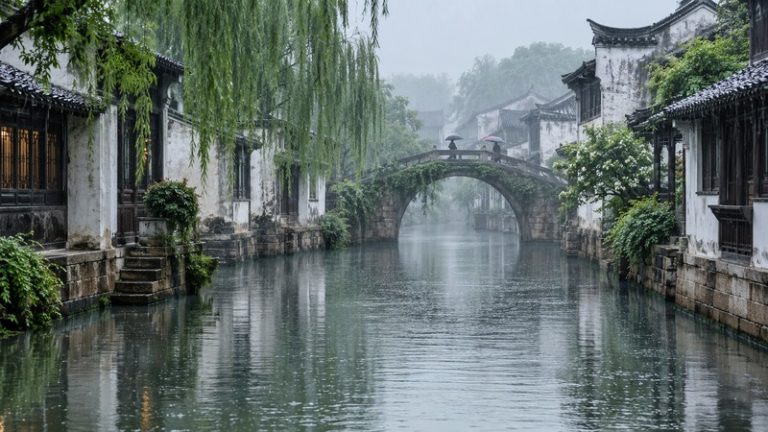
China has no single monsoon month. Compare South China, the Yangtze Meiyu belt, North China,…
Read More →