
What Season Is May in China? Calendar and Regional Context
May is meteorological spring in China, but local weather ranges from cool northern conditions to…
Read More →Grain Buds, also called Xiaoman, is the eighth of the 24 Chinese solar terms. It usually falls around May 20-22, when summer crops begin to fill but are not yet fully mature. In 2026, Grain Buds begins on May 21 in China Standard Time. This solar term is linked with early summer rain, crop growth, seasonal foods, traditional customs, and wellness practices.
Grain Buds, also called Xiaoman, begins on May 21, 2026 in China Standard Time. It means crops are becoming full but are not yet ripe, so the solar term is associated with early-summer rain, wheat growth, silkworm season, bitter greens, light foods, and careful preparation before harvest.
| Chinese name | Xiaoman, often translated as Grain Buds or Small Fullness. |
|---|---|
| 2026 date | May 21, 2026 in China Standard Time. |
| Seasonal position | The eighth solar term and the second term of summer. |
| Main meaning | Grains are filling but not fully mature, so care and rain still matter. |
| Common customs | Watching rain, noting crop signs, silkworm-related customs, and eating light seasonal foods. |
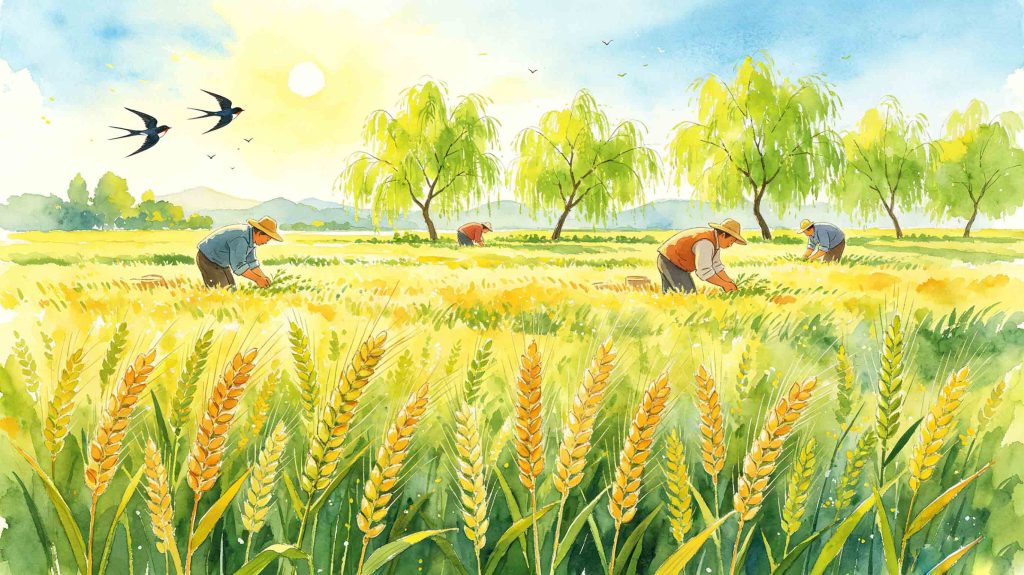
In 2026, Grain Buds, or Xiaoman, begins on May 21 in China Standard Time. In the Gregorian calendar, this solar term usually arrives around May 20-22 each year, depending on the exact astronomical position of the sun.
For readers outside China, the date can appear slightly different by time zone, but the seasonal meaning remains the same: late spring is turning into early summer, grains are filling, humidity rises, and rain becomes increasingly important for crops.
The Chinese name Xiaoman is often translated as Grain Buds or Small Fullness. It describes a state of growth that is promising but not complete. Wheat and other summer crops are beginning to form full grains, yet they are not ready for harvest.
This is why Xiaoman is different from a harvest festival. It is a solar term about watching, waiting, and caring for things that are still becoming full. The idea also carries a cultural meaning: fullness should be moderate, and growth should be protected before it reaches completion.
Xiaoman is part of the traditional Chinese seasonal calendar, a system that divides the year into 24 solar terms. These terms were used to guide farming, seasonal food choices, weather observation, and daily life.
For agriculture, Grain Buds marks a sensitive period. In northern China, wheat grains are growing fuller. In southern China, rainfall becomes especially important for rice fields. The name reminds farmers that crops have reached a hopeful stage, but they still need water, care, and protection.
During Grain Buds, the weather often becomes warmer, wetter, and more humid. Rain is especially meaningful because it supports growing grains and rice paddies. Traditional weather sayings connect Xiaoman with the arrival of fuller rivers, moist fields, and stronger early-summer heat.
The three traditional periods of Grain Buds are often described as:
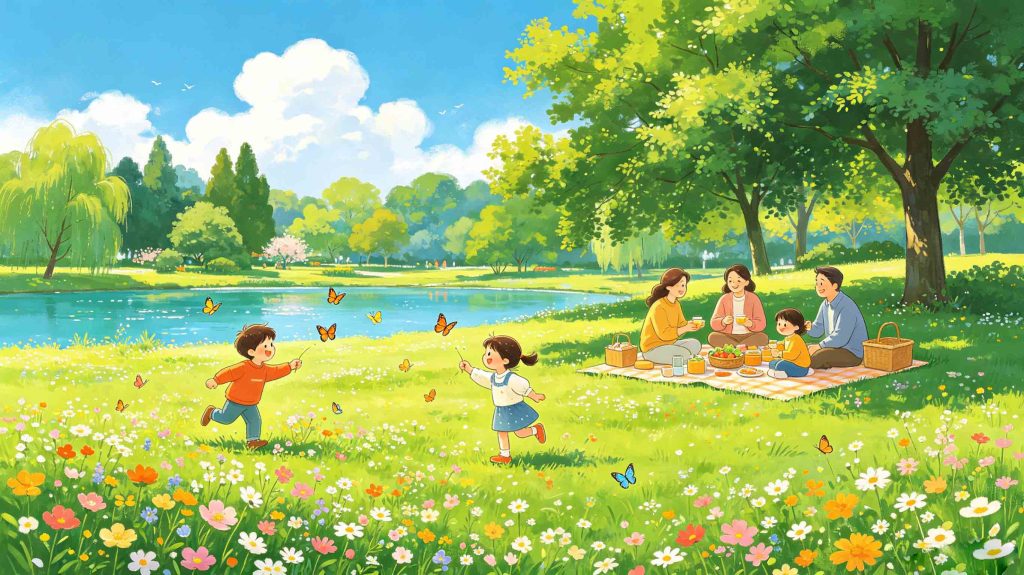
Traditional Grain Buds customs vary by region, but many are connected with agriculture, rain, silk production, and summer preparation. In some areas, people paid attention to rainfall and crop conditions. In others, families prepared seasonal foods or followed wellness practices for rising summer heat.
Xiaoman is also associated with the silkworm season in parts of China. Because silk production depends on the health of silkworms and mulberry leaves, this period carried practical and symbolic importance for rural households.
Foods for Grain Buds usually follow the early-summer principle of staying light, fresh, and balanced. Bitter herbs and seasonal vegetables are often mentioned in traditional customs because they are associated with clearing summer heat and adjusting to humid weather.
Common food ideas for the Xiaoman period include:
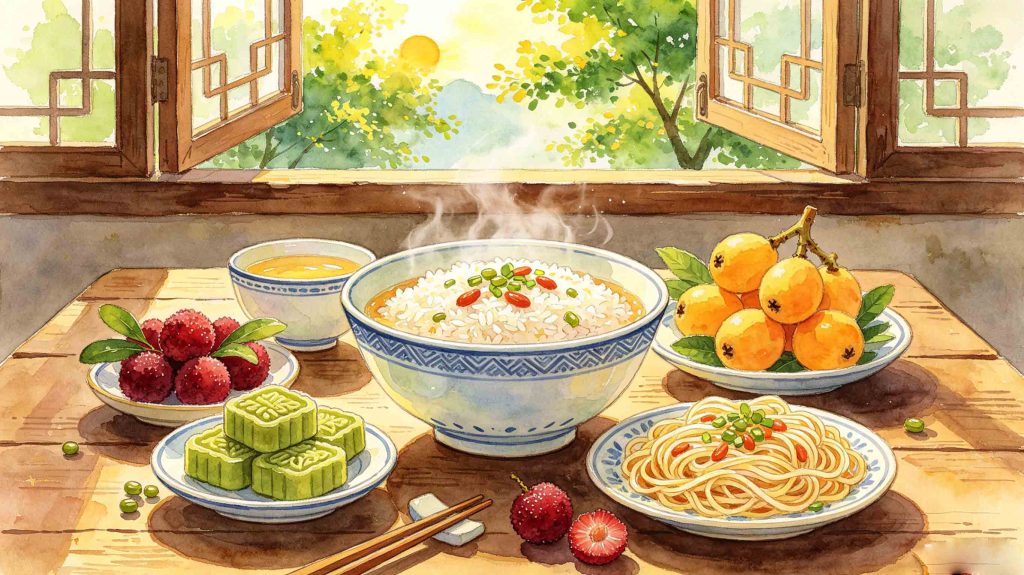
Traditional wellness advice for Grain Buds focuses on adapting to warmth and humidity. This does not mean following every old custom literally. A modern reader can use the solar term as a reminder to adjust sleep, food, hydration, and daily rhythm as summer approaches.
Grain Buds belongs to the early summer part of the 24 solar terms. It follows Start of Summer and comes before Grain in Ear. To see the complete seasonal sequence, visit our guide to all 24 solar terms.
You may also want to compare Xiaoman with Summer Solstice, when the year reaches its longest daylight period and the meaning of summer becomes more intense.
In 2026, Grain Buds, also called Xiaoman, begins on May 21 in China Standard Time. In most years, it falls around May 20-22 in the Gregorian calendar.
Xiaoman means small fullness. It describes the time when grains are becoming full but are not yet fully ripe. The term suggests growth, promise, and the need for continued care.
Yes. Grain Buds is an English translation of Xiaoman, the Chinese name of this solar term. Some sources also translate Xiaoman as Small Fullness.
The three traditional periods are bitter herbs flourishing, soft grasses withering, and wheat approaching maturity. These observations connect the solar term with plants, weather, and crop growth.
Traditional foods include bitter herbs, bitter greens, cucumber, fresh vegetables, light soups, and seasonal grains. The general idea is to eat lighter foods that suit warm and humid early-summer weather.
For more background on the astronomical basis of the solar-term system, see the Wikipedia article on Solar term.
May is meteorological spring in China, but local weather ranges from cool northern conditions to…
Read More →
Understand winter in China by month and region, from snowy northeast cities to mild southern…
Read More →
China has no single monsoon month. Compare South China, the Yangtze Meiyu belt, North China,…
Read More →