
What Season Is May in China? Calendar and Regional Context
May is meteorological spring in China, but local weather ranges from cool northern conditions to…
Read More →
Chinese seasonal wellness is more than just a trendy wellness buzzword—it’s a 2,000-year-old holistic practice rooted in Traditional Chinese Medicine (TCM) that guides people to align their daily lives with the natural rhythms of the seasons. For centuries, this idiomatic concept has been a cornerstone of Chinese health culture, emphasizing that human beings are an integral part of nature, not separate from it.
By adjusting daily habits to match the ebb and flow of each season, individuals can maintain balance, prevent illness, and nurture long-term vitality.
The roots of Chinese seasonal wellness stretch back to the Han Dynasty (206 BCE – 220 CE), though its foundational principles were first documented in the Huangdi Neijing (Yellow Emperor’s Inner Canon), a text compiled between the 3rd century BCE and 2nd century CE. This iconic work is structured as a series of conversations between the legendary Yellow Emperor (Huangdi), a mythical ruler revered as the father of Chinese civilization, and his chief physician, Qi Bo.
In the section titled Suwen (Basic Questions), Qi Bo outlines the core philosophy of aligning life with seasons, stating that “to nourish life, one must follow the seasons; to avoid harm, one must adapt to the climate.” Over generations, this ancient advice evolved into a widely used idiomatic phrase in Chinese culture, later translated into English as “Chinese seasonal wellness.” The concept was not just a medical guideline but a way of life, embedded in rural communities where farming rhythms dictated daily routines, and it was passed down through oral traditions and family practices for millennia. It remained a central part of Chinese health education until the modern era, when it gained renewed attention as a holistic alternative to Western, symptom-focused medicine.
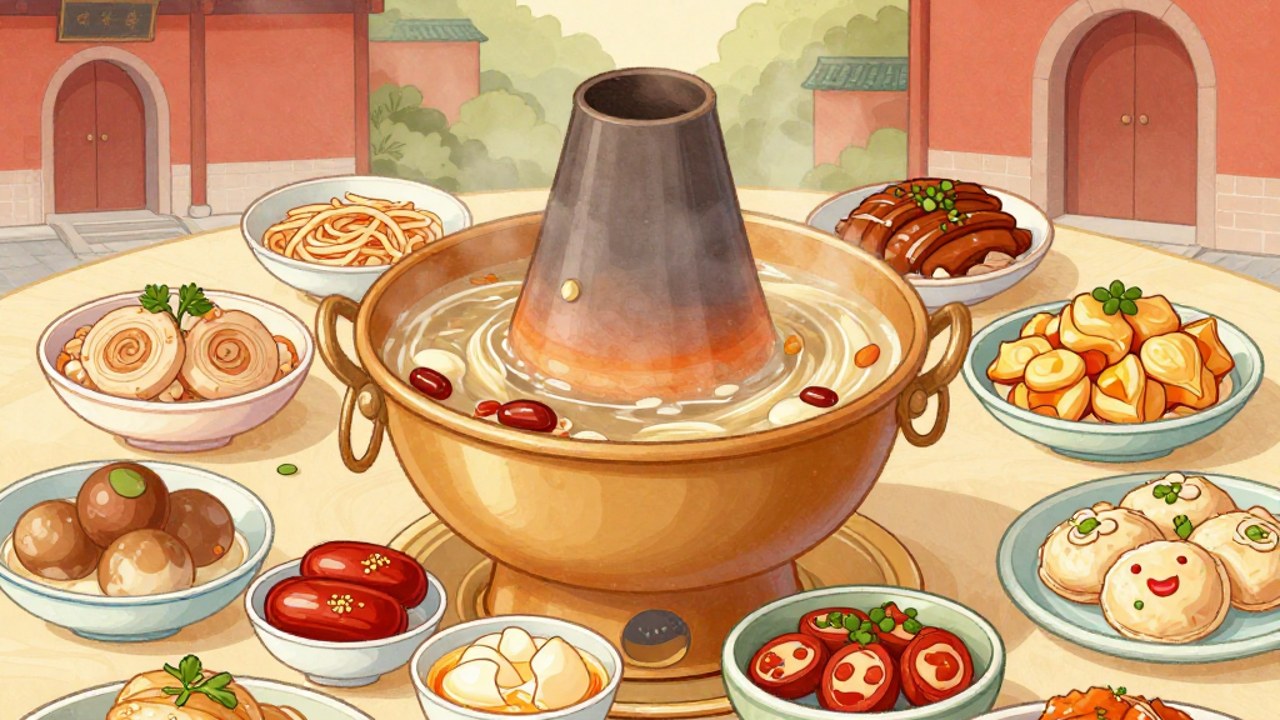
Chinese seasonal wellness is a holistic framework that encompasses all aspects of daily life, not just diet. At its core, it is based on TCM’s central principle of yin-yang balance, which holds that health depends on maintaining harmony between complementary forces in the body and the external environment.
The practice is structured around four seasons, and for more precise alignment, it also incorporates the 24 solar terms of the Chinese lunar calendar, which mark subtle shifts in temperature and light throughout the year. Each season has specific, actionable guidelines: in spring, individuals are encouraged to nourish their rising yang energy by spending time outdoors, engaging in gentle exercise like tai chi or brisk walking, and eating fresh, light foods such as sprouts, chives, and wild greens.
Summer calls for cooling the body, staying hydrated with herbal teas, avoiding excessive heat and strenuous activity during midday, and consuming bitter foods to support the digestive system. Autumn focuses on nourishing yin energy, calming the mind to combat seasonal melancholy, and eating moist, soothing foods like pears, honey, and oats to combat dryness.
Winter emphasizes conserving energy, staying warm with layered clothing and warming foods like root vegetables and lamb, and sleeping earlier to align with the shorter days and longer nights. A common mistake learners of this concept make is reducing Chinese seasonal wellness to just seasonal eating, overlooking its critical focus on sleep patterns, physical activity, and emotional state.
For example, while eating seasonal produce is important, adjusting your bedtime to match the season’s natural light is equally vital for maintaining balance.
The idiomatic phrase “Chinese seasonal wellness” is used in both formal and informal contexts, making it a versatile term for discussing health and lifestyle. Here are four practical usage examples that reflect its real-world application:
These examples show how the phrase is used to reference both traditional practices and modern adaptations, making it accessible to people of all ages and cultural backgrounds, whether they are new to TCM or familiar with its principles.
In an era of fast-paced, urban living, where many people struggle with burnout, seasonal affective disorder (SAD), and chronic stress, Chinese seasonal wellness offers a timeless solution that is deeply aligned with human nature. Unlike fleeting wellness trends that promise quick fixes, this practice is grounded in centuries of empirical observation about how the natural world affects human health.
Research in modern psychology and medicine has begun to validate its benefits: studies show that aligning sleep schedules with natural circadian rhythms (a key part of seasonal wellness) improves sleep quality by up to 30%, reduces symptoms of anxiety and depression, and boosts immune function by regulating hormone levels like cortisol and melatonin. Additionally, the focus on eating seasonal, local produce (a core component of Chinese seasonal wellness) supports sustainable agriculture and reduces the carbon footprint of food systems, making it a choice that benefits both personal health and the planet.
For many people, especially those in Western countries, Chinese seasonal wellness also offers a way to reconnect with nature, which has been linked to a 25% reduction in self-reported stress levels, according to a 2022 study by the University of Exeter. In a world where many people spend over 90% of their time indoors, this ancient practice provides a simple, actionable way to step outside and engage with the changing seasons, fostering a deeper sense of connection to the world around us.
Chinese seasonal wellness is closely tied to several other idiomatic phrases in Chinese health culture, each adding depth to its practice and philosophy. The first is yīn yáng tiáo hé (阴阳调和), which translates to “balancing yin and yang”—this is the foundational principle that underlies every aspect of Chinese seasonal wellness, from adjusting diet to modifying sleep patterns.
The second is shí liáng yǎng shēng (食疗养生), meaning “dietary wellness,” which refers to the subset of Chinese seasonal wellness that focuses on using food as medicine to support health, rather than just treating illness after it develops. The third is èr sì jié qì yǎng shēng (二十四节气养生), or “wellness based on the 24 solar terms,” which is a more detailed extension of Chinese seasonal wellness that takes into account the subtle climate changes marked by each of the 24 lunar solar terms, such as the Start of Spring, the Winter Solstice, or the Grain Rain.
These idioms are often used alongside Chinese seasonal wellness in discussions about traditional health practices, highlighting its interconnectedness with broader TCM philosophy and its role in daily life.
Q: Is Chinese seasonal wellness only for people who follow Traditional Chinese Medicine?
A: No, Chinese seasonal wellness is a flexible, accessible practice that anyone can follow, regardless of their knowledge of TCM. The core guidelines are simple and intuitive, such as eating fresh produce that is in season where you live, adjusting your sleep schedule to match the amount of daylight, and spending time outdoors.
You don’t need to be an expert to benefit from its principles—small, consistent changes are enough to make a difference. Q: Do I need to follow every rule of Chinese seasonal wellness strictly?
A: No, Chinese seasonal wellness is a guideline, not a rigid set of rules. It is designed to be adapted to your individual body, climate, and lifestyle.
For example, if you live in a tropical region where winters are warm, you won’t need to follow the same winter guidelines as someone in a cold northern climate. The goal is to find balance, not perfection, so feel free to adjust practices to fit what works for you.
Q: Is Chinese seasonal wellness the same as seasonal eating?
A: No, seasonal eating is an important part of Chinese seasonal wellness, but it is only one component. Chinese seasonal wellness also includes adjusting your exercise routine, sleep patterns, and emotional state to match the season.
For example, in autumn, it’s not just about eating pears—it’s also about slowing down your pace of life, reducing strenuous activity, and taking time to reflect, rather than pushing through at the same fast pace as summer.
Chinese seasonal wellness is more than just a set of health tips—it’s a philosophy that reminds us of our connection to the natural world. In a time when many people feel disconnected from the rhythms of nature, this ancient practice offers a way to slow down, listen to our bodies, and live in harmony with the seasons.
You don’t have to overhaul your entire life to start practicing it: small steps, like adding one seasonal food to your weekly meals or taking a 10-minute walk at sunrise, can make a big difference in your overall well-being. Whether you are looking to reduce stress, boost your immune system, or simply feel more grounded, Chinese seasonal wellness is a timeless guide that has helped people thrive for millennia, and it remains relevant today as a counterpoint to the chaos of modern life.
Wikipedia 7 Things About Chinese New Year Customs And Traditions You M Start of Autumn: Complete Guide to Liqiu Solar Term Major Cold: Complete Guide to Dahan Solar Term
May is meteorological spring in China, but local weather ranges from cool northern conditions to…
Read More →
Understand winter in China by month and region, from snowy northeast cities to mild southern…
Read More →
China has no single monsoon month. Compare South China, the Yangtze Meiyu belt, North China,…
Read More →