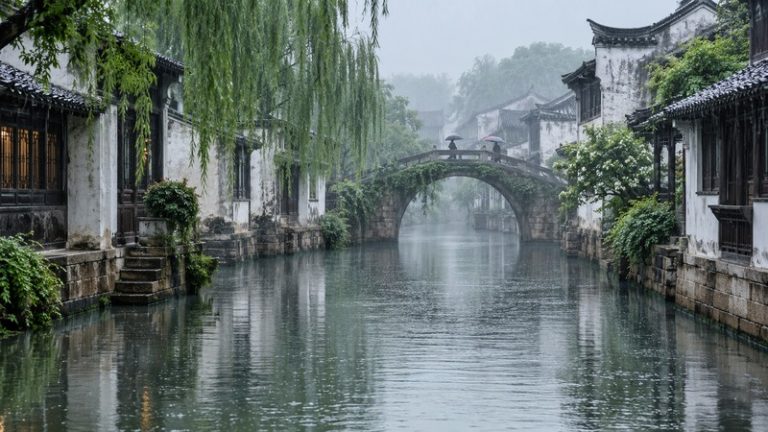
May is spring in China under the meteorological calendar, because meteorological spring covers March, April, and May in the Northern Hemisphere. On the ground, however, China is too large for one weather label: northern cities are usually in late spring, much of the south already feels like early summer, and high-elevation areas remain cooler.
Why May has more than one seasonal answer
There are three useful ways to describe the season. The meteorological calendar groups March through May as spring. The 24 solar terms place “Summer Commences” (Lixia) and “Corn Forms” or Grain Buds (Xiaoman) in May. Local climate adds a third answer, because the date when sustained summer conditions begin varies by latitude, altitude, and year.
The Hong Kong Observatory explains that the solar terms divide the Sun’s apparent annual path into 24 equal segments. It also cautions that the system reflects the climate of central China in ancient times. That makes the solar terms valuable seasonal markers, but they are not same-day weather forecasts for every Chinese city.
Regional context: how May feels across China
Think regionally when planning a May trip. A warm afternoon in Beijing, a humid day in Guangzhou, and a cool morning on the Tibetan Plateau can all occur during the same week.
| Area | Practical seasonal description | What to expect |
|---|---|---|
| North China, including Beijing | Late spring moving toward summer | Warm afternoons, cooler mornings, stronger sun, and occasional wind or rain. |
| Lower Yangtze, including Shanghai and Hangzhou | Warm spring to early summer | Rising humidity, changeable rain, and increasingly warm days. |
| South China, including Guangzhou and Shenzhen | Early-summer conditions | Heat, humidity, frequent showers, and possible heavy rain. |
| Northeast China | Spring | Milder days with cooler evenings; seasonal development usually lags southern regions. |
| Western plateaus and high mountains | Elevation-dependent | Large day-night changes and conditions that can feel much cooler than lowland cities. |
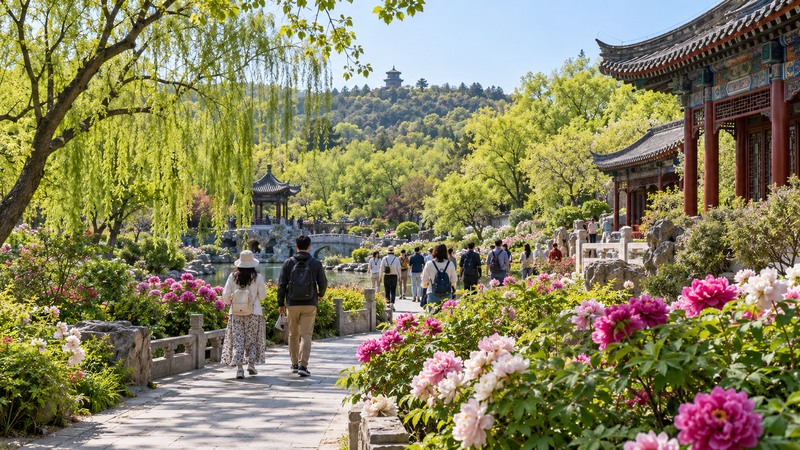
Southern China can already feel like summer
In the south, a calendar answer can be less useful than the heat-and-rain pattern. The China Meteorological Administration has documented how the onset of summer differs among cities and years: southern areas may enter summer much earlier, while some Yangtze River cities can remain in spring longer during rainy, cool periods.
This regional variation is why “May is spring” should be read as a calendar classification, not a promise of mild weather everywhere. Check the local forecast close to departure, especially for southern and river-basin destinations where humid rain can change outdoor plans.

What Lixia and Xiaoman mean in May
Lixia, commonly translated as Beginning of Summer or Summer Commences, occurs in early May. Xiaoman, often translated as Grain Buds or Corn Forms, follows in late May. Their names describe positions in a traditional seasonal and agricultural system.
They do not mean that every part of modern China becomes meteorological summer on Lixia. The China Meteorological Administration describes seasonal onset using sustained temperature criteria, so a city can reach summer before or after the traditional marker.
What to pack for China in May
- Bring layers: a breathable base layer and a light jacket work for cooler mornings, air-conditioned transport, and higher elevations.
- Add rain protection: a compact umbrella or light rain shell is useful in central and southern regions.
- Plan for sun: carry a hat and sun protection for exposed sightseeing, especially in dry northern areas.
- Choose walking shoes: use comfortable shoes with grip for long city days and wet stone paths.
- Recheck the forecast: look at the destination-level forecast several days before travel instead of relying on a national monthly average.

A simple way to answer the question
If someone asks “What season is May in China?”, answer in two parts: May is meteorological spring, but local conditions range from cool spring to early summer. Then name the city or region. That short answer is more accurate than calling all of China either spring or summer.
Frequently asked questions
Is May spring or summer in Beijing?
May is the final month of meteorological spring. In practical terms, Beijing usually moves from late spring toward summer during the month, so warm afternoons and cooler mornings can occur together.
Is May already summer in southern China?
It can feel like summer in many southern cities because heat, humidity, and rainfall are already building. The formal onset of summer varies by location and year.
Does Lixia mean summer starts everywhere in China?
No. Lixia is a traditional solar-term marker. It does not guarantee the same temperature or weather across every region on that date.
Is May a rainy month in China?
Rain risk generally increases in central and southern China, while northern areas can be drier. Use the local forecast for the exact destination because rainfall patterns differ widely.