
What Season Is May in China? Calendar and Regional Context
May is meteorological spring in China, but local weather ranges from cool northern conditions to…
Read More →Winter solar terms foods cover six traditional calendar markers from Beginning of Winter to Great Cold. They do not form one prescribed diet: documented examples include Jiangnan winter preservation, Dongzhi dumplings and rice foods, and Guangdong Dahan glutinous rice.
The traditional winter sequence is Lidong, Xiaoxue, Daxue, Dongzhi, Xiaohan and Dahan. This is a Northern Hemisphere seasonal framework. It should not be read as a statement that winter weather begins everywhere at Lidong, or that all crops and markets follow the same dates.
Source: Hong Kong Observatory: The 24 Solar Terms.
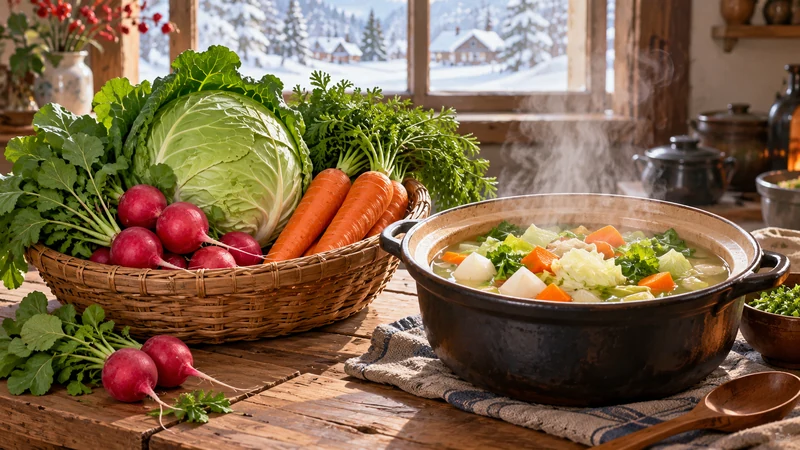
A People’s Daily Overseas Edition feature connects Minor Snow with preserved vegetables in Jiangnan, giving examples from Nanjing, Yizheng and Hangzhou. This is evidence about regional provisioning culture, not a safe home curing procedure. Fresh cabbage and radish, stored vegetables and preserved foods should be distinguished in a food calendar.
Source: People’s Daily Overseas Edition: Minor Snow food customs (2015).
The Dongzhi customs source mentions northern dumplings, southern rice foods and Jiangnan red-bean glutinous rice. The Dahan source describes Guangdong glutinous rice with preserved meat and other additions. These examples belong to their named terms; moving them to every winter term would erase the cultural distinction.
Source: 12371.cn: Winter Solstice regional foods; 12371.cn: Great Cold customs.
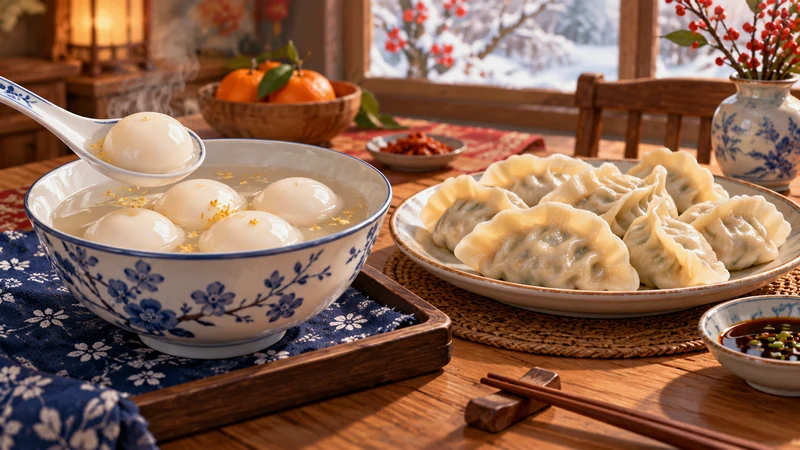
Laba, Weiya and Lunar New Year follow lunar dates. They may be discussed beside winter solar terms, but cannot be assigned to the same term every year. A seasonal table can record a term, place, food and source while leaving an unsupported custom unassigned. Neither preserved food nor a warming-food belief establishes medical efficacy.
Dates below are for the Gregorian year 2026 in Hong Kong time (UTC+8), not fixed dates for every year. Solar longitude identifies the astronomical marker.
January entries precede the November–December entries in calendar year 2026. This table names the traditional winter sequence; it is not a single continuous winter with all dates in order.
| Term | 2026 date, UTC+8 | Solar longitude |
|---|---|---|
| Beginning of Winter (Lidong) | 7 November | 225° |
| Minor Snow (Xiaoxue) | 22 November | 240° |
| Great Snow (Daxue) | 7 December | 255° |
| Winter Solstice (Dongzhi) | 22 December | 270° |
| Minor Cold (Xiaohan) | 5 January | 285° |
| Great Cold (Dahan) | 20 January | 300° |
Beginning of Winter, Minor Snow, Great Snow, Winter Solstice, Minor Cold and Great Cold.
No. Regional ingredients, customs and household choices differ.
No. It follows the lunisolar calendar and is separate from the solar-term sequence.
May is meteorological spring in China, but local weather ranges from cool northern conditions to…
Read More →
Understand winter in China by month and region, from snowy northeast cities to mild southern…
Read More →
China has no single monsoon month. Compare South China, the Yangtze Meiyu belt, North China,…
Read More →