
What Season Is May in China? Calendar and Regional Context
May is meteorological spring in China, but local weather ranges from cool northern conditions to…
Read More →Spring Equinox customs include contemporary egg-painting and egg-balancing activities, such as the documented 2026 kindergarten activity in Qingdao, Shandong. That example is local, not a rule for every family.
Spring Equinox, Chunfen (春分), marks the March equinox, when the Sun crosses the celestial equator northward. In 2026 it falls on March 20 in Hong Kong Time (UTC+8), at a solar longitude of 0°.
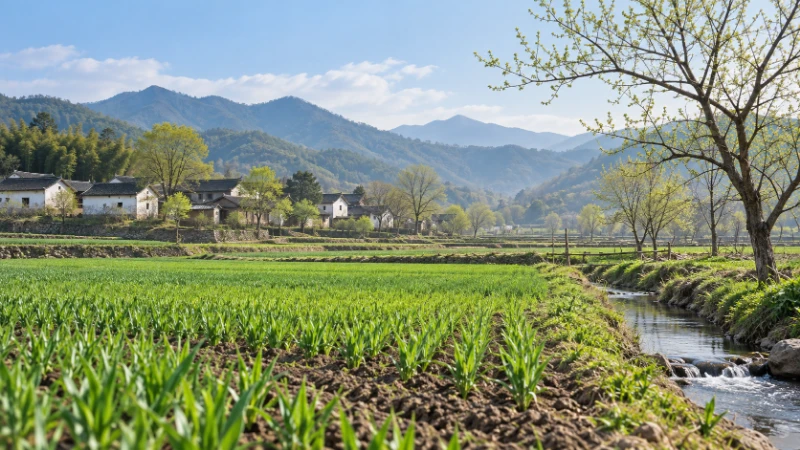
Day and night are approximately equal around the equinox. Exact sunrise-to-sunset duration depends on location, atmospheric refraction and how sunrise is defined; it is not exactly twelve hours everywhere.
| Chinese name | Chunfen (春分) |
|---|---|
| Solar longitude | 0° |
| 2026 date | March 20, Hong Kong Time (UTC+8) |
| Adjacent terms | Awakening of Insects → Spring Equinox → Clear and Bright |
China Daily documented egg-painting and egg-balancing activities at a kindergarten in Jimo district, Qingdao, Shandong, on March 20, 2026. This establishes a contemporary local activity, not the age or universal reach of the custom.
The seasonal word “spring” here follows the traditional Northern Hemisphere calendar. The Hong Kong Observatory relates many term names to ancient central Chinese weather and agriculture. Local weather and plant development may differ; Southern Hemisphere seasonal timing is reversed.
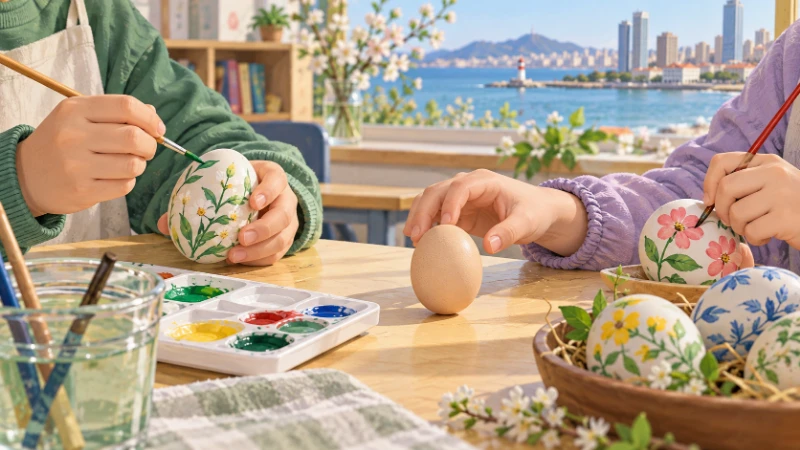
The report describes a legend about balancing eggs. Treat it as a cultural story, not evidence that the equinox creates a special force. A classroom can compare attempts on several dates.
Regional example source: read the named account. The account supports the place and practice stated above, not medical benefits or a national rule.
For a family or school activity, put the astronomical date beside the description of what participants did. Egg painting is an activity; the Sun reaching 0° is the calendar boundary. The two can be discussed together without claiming that painting or balancing eggs changes with celestial forces.
Hong Kong Observatory: term names and solar longitudes; 2026 Gregorian–lunar conversion table; date and time notes (Hong Kong Time, UTC+8). The calendar sources establish astronomical timing and terminology; they do not verify regional customs.
March 20 in Hong Kong Time (UTC+8). The solar-term boundary is at 0° solar longitude; civil dates in other timezones can differ.
No. Customs require place-specific sources and vary between communities and households. The astronomical calendar does not establish a national food or ritual rule.
May is meteorological spring in China, but local weather ranges from cool northern conditions to…
Read More →
Understand winter in China by month and region, from snowy northeast cities to mild southern…
Read More →
China has no single monsoon month. Compare South China, the Yangtze Meiyu belt, North China,…
Read More →