
What Season Is May in China? Calendar and Regional Context
May is meteorological spring in China, but local weather ranges from cool northern conditions to…
Read More →Awakening of Insects solar term traditions belong to Jingzhe (惊蛰), an early-spring solar term associated with renewed insect activity, seasonal farming and local customs such as eating pears. In Guangdong and Hong Kong, some people also observe the folk ritual known as “villain hitting.” These are regional and household practices; there is no single celebration followed by everyone in China.
In 2026, Jingzhe falls on 5 March in Hong Kong time (UTC+8). Its astronomical definition is the Sun reaching an ecliptic longitude of 345°. The date comes from the solar calendar and can vary by year and time zone; it is not a fixed lunar festival date.
| Chinese name | 惊蛰 — Jīngzhé, commonly translated as Awakening of Insects or Insects Waken |
|---|---|
| Calendar position | Third of the 24 terms when counting from Beginning of Spring; follows Rain Water and precedes the Spring Equinox |
| Solar longitude | 345° |
| 2026 date | 5 March, Hong Kong time (UTC+8) |
| Seasonal context | Early spring in the traditional Northern Hemisphere calendar; local conditions differ |
| Examples of customs | Eating pears in some communities; villain hitting in Guangdong and Hong Kong |
The Hong Kong Observatory’s explanation of the 24 solar terms gives the astronomical positions and explains that their weather and farming names reflect, in part, the historical climate of central China. Its March 2026 calendar supplies the year-specific date. These calendar sources establish timing, rather than proving that a particular custom is universal.
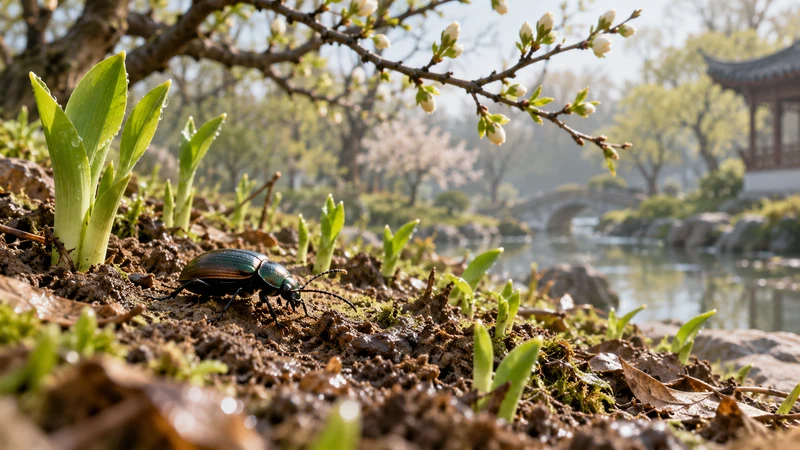
The traditional image behind Jingzhe is spring thunder stirring creatures that have remained inactive through winter. It expresses the transition toward a more active season. The name is a cultural way of describing seasonal change, not a prediction that thunder will arrive on that exact day in every place.
Latitude, elevation, habitat and the weather of a particular year affect what visitors actually see. A warm southern garden and a cold northern hillside can look quite different on the same calendar date. Outside the Northern Hemisphere, March does not share the same seasonal setting. Keep the astronomical date separate from observations of insects, buds and rainfall.
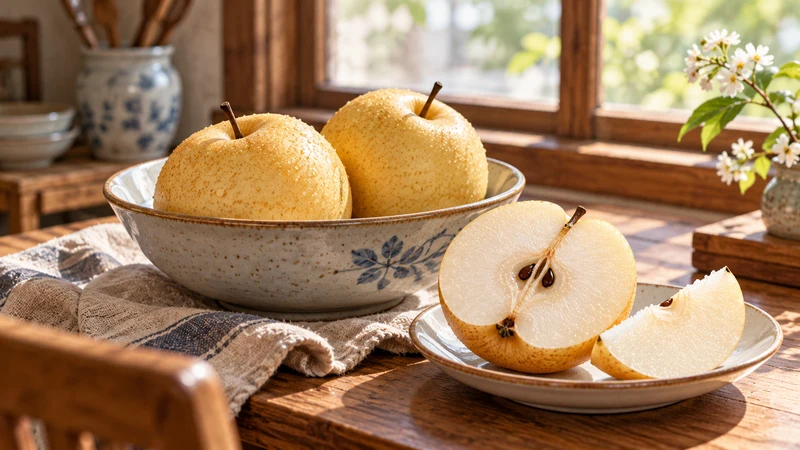
Pears are one of the foods associated with Jingzhe. A 2026 report on the pear custom describes family preparations in Shanxi and explains a symbolic connection between lí, “pear,” and lí, “separate.” In some traditions, that wordplay expresses a wish for pests to stay away from crops or for misfortune to leave the household.
Families may serve pears fresh or cooked, and preparations vary. This is an example of seasonal food culture, rather than a required menu for the whole country. Stories about pears warding off illness belong to traditional belief; this article does not present eating pears as a treatment or a way to prevent disease.
The University of Chinese Academy of Sciences’ overview of Jingzhe customs describes villain hitting as a folk practice in Guangdong and Hong Kong. Paper figures represent unwanted obstacles or misfortune; participants or ritual practitioners strike the paper with a shoe or another implement. The action concerns symbolic paper figures, not an instruction to harm a person.
The same source associates white-tiger offerings with this seasonal folk tradition. Such rites should be understood in their local cultural setting. They do not establish that bad luck can be objectively removed, and they should not be treated as customs observed by every Chinese family. When discussing a specific community, name that community instead of applying one regional practice to the whole country.
Jingzhe is also associated with preparation for spring agricultural work. That link explains why renewed insect activity and the condition of the land matter in seasonal sayings. An astronomical marker alone cannot determine when a farmer should sow: crop, soil conditions and local weather remain necessary considerations.
For a home or classroom observation, record your location and date, then note a bud, an insect or the condition of the soil without disturbing it. Return to the same place a week later and compare. “No insects observed” is a useful record too; it keeps the observation honest instead of forcing nature to match the term’s name. This modern activity is a way to understand seasonal differences, not an ancient Jingzhe ritual.
Jingzhe falls on 5 March 2026 in Hong Kong time (UTC+8). Check a year-specific calendar and its time zone before reusing the date.
No. The name reflects traditional seasonal imagery. Thunder, insect activity and plant growth vary with local conditions.
No. Pear customs differ by community and household; villain hitting is associated with regional folk practices, including Guangdong and Hong Kong.
For the wider calendar, see our 24 solar terms guide. For contrasting summer markers, explore Major Heat and the Summer Solstice. The UNESCO solar-terms entry provides further cultural context.
May is meteorological spring in China, but local weather ranges from cool northern conditions to…
Read More →
Understand winter in China by month and region, from snowy northeast cities to mild southern…
Read More →
China has no single monsoon month. Compare South China, the Yangtze Meiyu belt, North China,…
Read More →