What Season Is May in China? Calendar and Regional Context
May is meteorological spring in China, but local weather ranges from cool northern conditions to…
Read More →Rain Water solar term traditions are local ways of marking Yushui (雨水), the second of the 24 solar terms. In Sichuan, documented examples include choosing a child’s honorary godparents and visiting parents with gifts. These practices express family hopes for growth and well-being; they are regional customs, not a nationwide festival programme.
Rain Water begins when the Sun reaches an ecliptic longitude of 330°. In the Hong Kong Observatory’s 2026 calendar, it falls on 18 February 2026, Hong Kong time (UTC+8). A different year or time zone can give a different date. It follows Beginning of Spring and precedes Awakening of Insects.
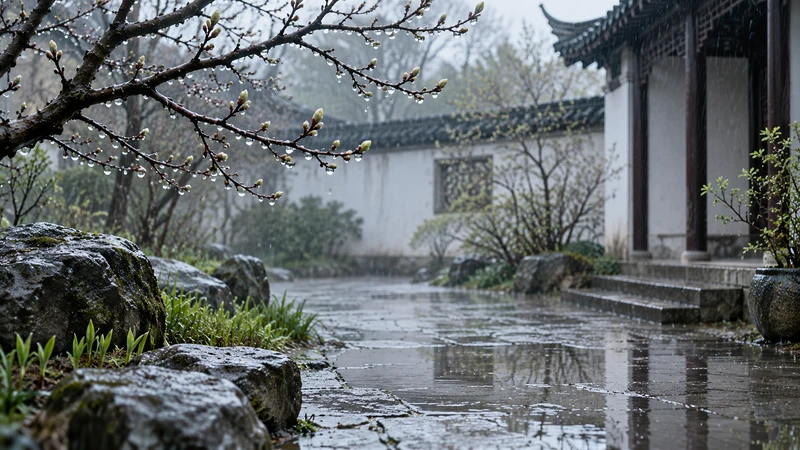
Yushui names a seasonal transition toward rain and renewed growth in the traditional Northern Hemisphere calendar. Its name does not mean that rain will fall in every town on 18 February, or that snow has disappeared throughout China. Mountain, northern and southern locations can have very different conditions at the same astronomical moment.
The Observatory’s explanation of solar terms distinguishes the Sun’s position from the weather and farming names that reflect historical central-Chinese conditions. That distinction matters if you live outside China or in the Southern Hemisphere: the date remains a solar-calendar marker, while the local season and weather may differ.
| Name | 雨水 — Yǔshuǐ, Rain Water; the Observatory also uses “Spring Showers” |
|---|---|
| Solar longitude | 330° |
| 2026 date | 18 February, Hong Kong time (UTC+8) |
| Seasonal setting | Early spring in the traditional Northern Hemisphere sequence |
| Customs discussed here | Sichuan family and kinship practices; no universal menu or ceremony |
The Sichuan custom called la baobao (拉保保) involves choosing honorary godparents for a child. A People’s Daily Sichuan report, citing folklorist Liu Xiaochang, describes historical Rain Water gatherings at Jinhua Bridge near Chengdu and a wish for children to thrive.
The report dates Guanghan’s Baobao Festival to the sixteenth day of the first lunar month. That local lunar festival and the solar term must be checked separately; they are not interchangeable dates.
The same historical Chengdu account describes daughters and sons-in-law visiting parents around Rain Water with cooked meat and other gifts. A red ribbon could carry a wish for elders’ longevity. The meaning is affectionate and symbolic: neither the ribbon nor a seasonal meal guarantees long life or good health.
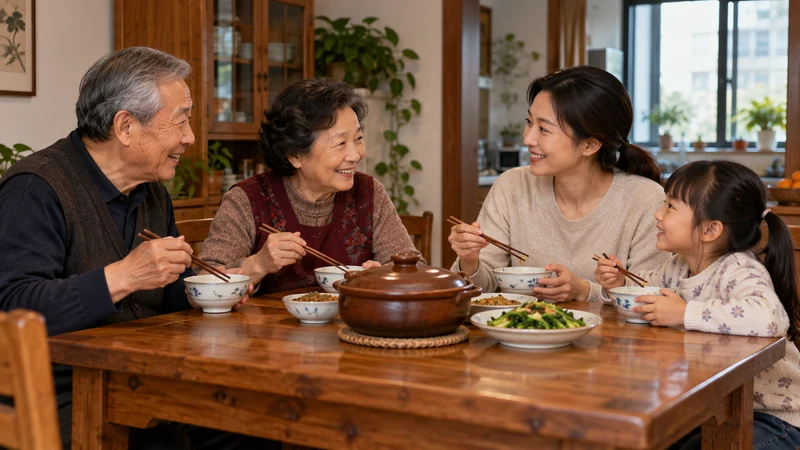
A modern family can mark the occasion by sharing a meal or asking relatives how they remember the season. Such a visit need not reproduce every historical object or ceremony. If you are documenting a family’s custom, record the place, the person’s relationship to the tradition and the date they actually use. That preserves differences instead of turning one recollection into a national rule.
For a visitor, the most useful seasonal question is what is changing locally. Compare the amount of rain, the condition of the ground and the first buds with what you noticed a week earlier. A dry day is still a valid observation during Rain Water; the term’s name is not a daily forecast.
For a garden, Yushui can be a reminder to inspect soil and review local planting guidance. It cannot supply a safe sowing date for every crop. A bed that remains frozen, saturated or exposed to frost needs decisions based on its actual condition. This is a modern use of the calendar, separate from the family rites described above.
Rain Water falls on 18 February 2026 in Hong Kong time (UTC+8). Its solar longitude is 330°; the date varies by year and time zone.
No. The documented Guanghan festival uses the sixteenth day of the first lunar month, while Rain Water is a solar term. Those dates must be checked separately.
No. Rain Water is a solar-calendar marker with traditional seasonal associations. Local rainfall, snow and planting conditions can differ.
Continue with the 24 solar terms guide, Beginning of Spring traditions and Awakening of Insects traditions. For other seasonal comparisons, see Major Heat and Summer Solstice. UNESCO’s solar-terms entry provides wider cultural context.
May is meteorological spring in China, but local weather ranges from cool northern conditions to…
Read More →
Understand winter in China by month and region, from snowy northeast cities to mild southern…
Read More →
China has no single monsoon month. Compare South China, the Yangtze Meiyu belt, North China,…
Read More →