
What Season Is May in China? Calendar and Regional Context
May is meteorological spring in China, but local weather ranges from cool northern conditions to…
Read More →Beginning of Spring solar term traditions welcome Lichun (立春) through seasonal foods and local customs. “Biting spring” can mean eating spring pancakes or spring rolls; some communities also keep spring decorations or agricultural rites. These practices differ by place and family. Lichun is a solar term, and its date is separate from Lunar New Year’s Day.
In 2026, Lichun falls on 4 February in Hong Kong time (UTC+8), according to the Hong Kong Observatory’s annual calendar. It marks the Sun reaching an ecliptic longitude of 315°. It is usually counted first in the traditional sequence of 24 solar terms and is followed by Rain Water.
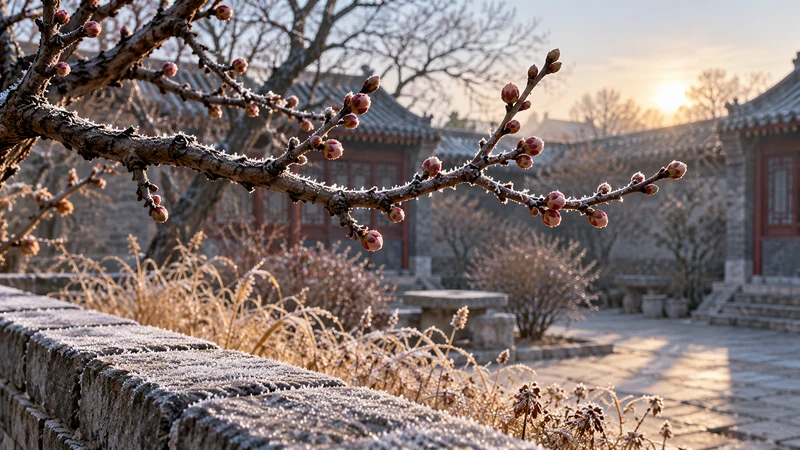
The word li means beginning or establishment, so Lichun names the beginning of spring in the traditional calendar. It does not announce that every place has become warm. A northern field may remain frozen while a southern garden shows new growth. Elevation, latitude and the weather of that year affect the landscape.
The Observatory’s solar-term explanation gives the astronomical definition. Its seasonal names reflect a Northern Hemisphere framework and historical Chinese observations. Readers in the Southern Hemisphere should not interpret a February date as the start of their local spring.
| Chinese name | 立春 — Lìchūn, Beginning of Spring or Spring Commences |
|---|---|
| Solar longitude | 315° |
| 2026 date | 4 February, Hong Kong time (UTC+8) |
| Calendar position | First when counting the 24 terms from Lichun; followed by Rain Water |
| Food examples | Spring pancakes and spring rolls associated with “biting spring” |
| Local limit | Customs and weather vary; the term is not the same event as Lunar New Year |
The food custom known as yaochun (咬春), or biting spring, makes the change of season tangible through a meal. A 2026 account published by Fujian’s health authority describes thin spring pancakes served with fillings such as vegetables. The culinary form is easy to understand: a pancake wraps a selection of cooked fillings instead of representing one compulsory dish.
Spring rolls offer another familiar form of the custom. A 4 February 2026 report from Shanghai’s Huangpu district documents seasonal foods at Yuyuan, including spring rolls. This is a local example, rather than evidence that all southern households celebrate alike.
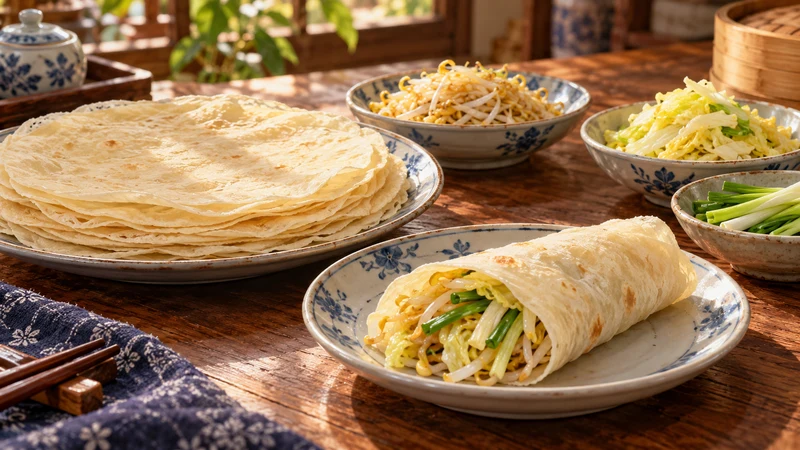
If you mark Lichun with a meal, ask what your family calls it and what ingredients they use. One household may roll pancakes at home; another may buy spring rolls or simply enjoy a seasonal vegetable dish. Eating a particular food does not bring a guaranteed health benefit or change anyone’s fortune. The significance here is the shared seasonal custom.
A Tongji University Library overview describes spring paintings and calligraphy used to welcome the season. It also identifies a more specific practice in Chengcheng, Shaanxi: making coloured cloth tassels or wheat-ear forms as symbols of hopes for a good harvest.
These examples show why a list of “Chinese spring traditions” needs place names. A local tassel custom is not something every family must observe, and a symbolic wish is not proof that a ritual controls the harvest. The same care applies to accounts of spring-ox ceremonies: their historical and local setting should accompany any description, rather than presenting them as a current nationwide activity.
Solar terms follow the Sun’s annual position, while the first day of a Chinese-calendar month follows the lunar-month system. In 2026, the Observatory’s conversion table places Lunar New Year’s Day on 17 February, after Lichun on 4 February. Calling both events “the beginning of spring” can hide that difference.
For a family gathering, use the name and date of the event you intend to mark. For a weather observation or gardening note, record Lichun’s year and time zone, then describe what you see locally. The calendar offers a reference point; it does not replace local weather or a crop’s planting requirements.
Lichun falls on 4 February 2026 in Hong Kong time (UTC+8), when the Sun reaches an ecliptic longitude of 315°.
No. In 2026, Lichun is on 4 February and Lunar New Year’s Day is on 17 February in the Hong Kong calendar. They use different calendar markers.
No. Spring pancakes and spring rolls are examples; menus and participation vary by community and household.
Explore the 24 solar terms guide and the next marker, Rain Water. To compare spring with summer, see Major Heat and Summer Solstice. The UNESCO solar-terms entry provides broader cultural context.
May is meteorological spring in China, but local weather ranges from cool northern conditions to…
Read More →
Understand winter in China by month and region, from snowy northeast cities to mild southern…
Read More →
China has no single monsoon month. Compare South China, the Yangtze Meiyu belt, North China,…
Read More →