What Season Is May in China? Calendar and Regional Context
May is meteorological spring in China, but local weather ranges from cool northern conditions to…
Read More →Winter Solstice traditions, known as Dongzhi (冬至), center on gathering with family, preparing regional festival foods and, in some households, remembering ancestors. Dumplings are associated with northern Chinese celebrations, while tangyuan rice balls are familiar in many southern communities. These customs vary by place and family. In 2026, Dongzhi falls on December 22 in Hong Kong time (UTC+8).
| Field | Winter Solstice fact |
|---|---|
| Chinese name | 冬至 — Dongzhi |
| Solar longitude | 270° |
| 2026 date | December 22, Hong Kong time (UTC+8) |
| Calendar basis | The Sun’s position, rather than a fixed lunar date |
| Seasonal setting | The December solstice: winter in the Northern Hemisphere, summer in the Southern Hemisphere |
| Customs | Family meals, regional dumpling or rice-ball traditions, and ancestral remembrance in some families |
The Hong Kong Observatory’s solar-term guide places Winter Solstice at solar longitude 270°. Its 2026 calendar gives December 22 for Hong Kong. The date can shift between years and time zones; December 22 should not be presented as an annual rule.
In the Northern Hemisphere, the December solstice marks the shortest daylight period of the year, with the pattern becoming more pronounced farther from the equator. Polar regions have additional complications, including continuous darkness. Days begin lengthening afterward, but this does not mean temperatures immediately rise. The US National Weather Service explains the solstices through Earth’s axial tilt. Local weather, frost and snowfall cannot be inferred from the festival alone.
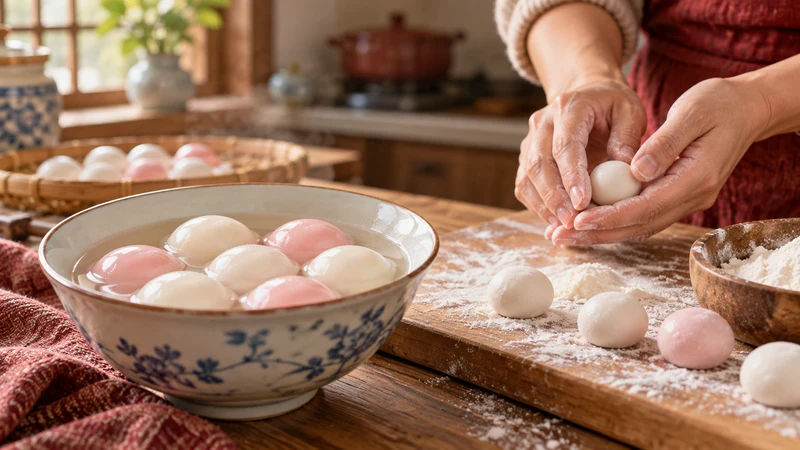
Food gives many Dongzhi gatherings their familiar shape. East China Normal University’s Winter Solstice event describes northern jiaozi and southern tangyuan traditions and includes hands-on preparation of both. Jiaozi are filled dumplings; tangyuan are balls made from glutinous rice flour, served in soup. They are different foods, even though English translations sometimes call both “dumplings.”
The north–south comparison is a useful introduction, not a rule for every household. Migration, family background and local preferences can bring several traditions to the same table. Sharing the preparation can matter as much as choosing one dish. A family might wrap jiaozi together, roll rice balls, or serve the meal it has long associated with Dongzhi.
Dongzhi can bring relatives together for a meal and a conversation about family memories. The university’s account connects the festival with reunion and historical ancestral observance. Those practices are meaningful within particular communities; they do not establish that every Chinese family performs the same ritual today.
A personal example comes from recipe writer Bee Yinn Low’s family tangyuan account. She recalls her aunt gathering relatives to roll rice balls, preparing ancestral offerings and sharing a meal afterward. This is evidence of her own family experience, rather than a universal ceremony. Visitors should follow their hosts’ explanation and ask before photographing a private observance.
Start with the family or community tradition you are joining. Ask which foods they prepare, what the gathering means to them and whether remembrance is part of the occasion. If you are organizing a simple meal yourself, cooking one suitable dish together is a practical way to focus on company rather than recreating a ceremony without context.
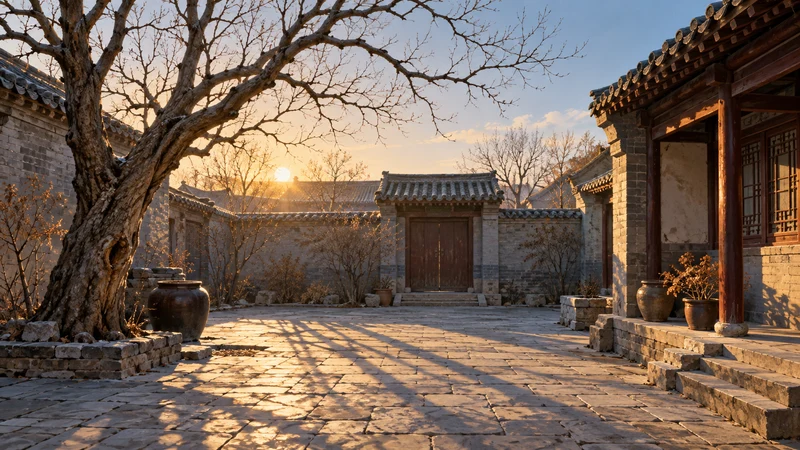
For a seasonal activity, observe the length of daylight at your own location over several weeks. A long shadow on a winter afternoon illustrates the low Sun, but an illustration cannot prove a historical custom or a local weather forecast. Festival foods are cultural foods; claims that they cure illness or guarantee protection from cold require separate evidence.
Explore the complete 24 solar terms, or compare Dongzhi with the Summer Solstice at the opposite point in the annual cycle. For a later summer seasonal marker, see Major Heat. UNESCO’s solar-terms entry provides context for the wider calendar tradition.
Dongzhi falls on December 22, 2026, in Hong Kong time (UTC+8), according to the Hong Kong Observatory calendar. Dates can differ by year and time zone.
No. Jiaozi are associated with northern Chinese traditions and tangyuan with many southern communities, but local and family customs vary.
No. It marks the December solstice at solar longitude 270°. The Northern Hemisphere has its shortest daylight period around this point, while the Southern Hemisphere has its summer solstice; local temperatures follow their own seasonal patterns.
May is meteorological spring in China, but local weather ranges from cool northern conditions to…
Read More →
Understand winter in China by month and region, from snowy northeast cities to mild southern…
Read More →
China has no single monsoon month. Compare South China, the Yangtze Meiyu belt, North China,…
Read More →