
What Season Is May in China? Calendar and Regional Context
May is meteorological spring in China, but local weather ranges from cool northern conditions to…
Read More →Autumn solar terms foods combine seasonal ingredients with local customs, not a fixed menu for six dates. A documented old Beijing Beginning of Autumn practice includes eating meat, while the fruits and grains pictured here are contemporary food examples rather than obligatory festival dishes.
Liqiu, Chushu, Bailu, Qiufen, Hanlu and Shuangjiang run from Beginning of Autumn to Frost’s Descent. These are Chinese Northern Hemisphere calendar markers. Liqiu does not mean summer heat ends that day, and Shuangjiang does not guarantee frost at every location.
Source: Hong Kong Observatory: The 24 Solar Terms.
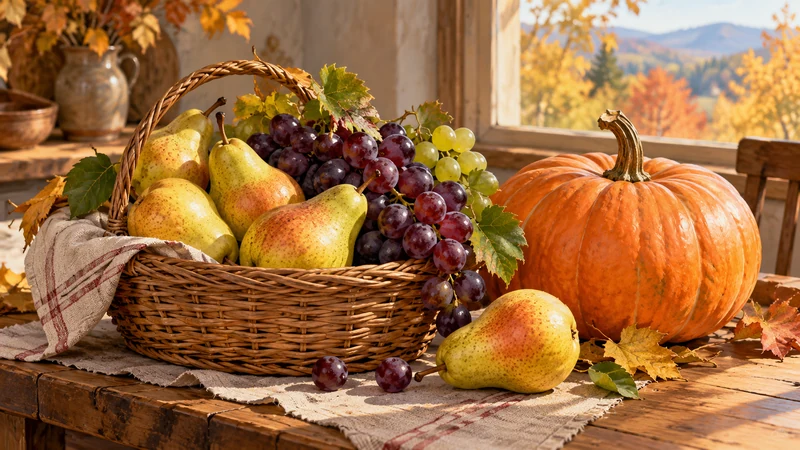
The 12371.cn Liqiu page, citing a book excerpt, identifies eating meat as part of an old Beijing practice associated with tie qiubiao. The same page describes biting autumn with fruit but supplies less specific locality information, so this guide does not invent a province-wide origin. Cultural replenishment language does not establish a medical need to gain weight.
Source: 12371.cn: Beginning of Autumn customs.
Pears, grapes, chestnuts, pumpkins and grains make useful contemporary food examples. Their harvest windows vary with region and cultivar, and some market produce is stored or imported. A plate of these foods is not evidence of a White Dew or Cold Dew ritual unless a source identifies the community and practice.
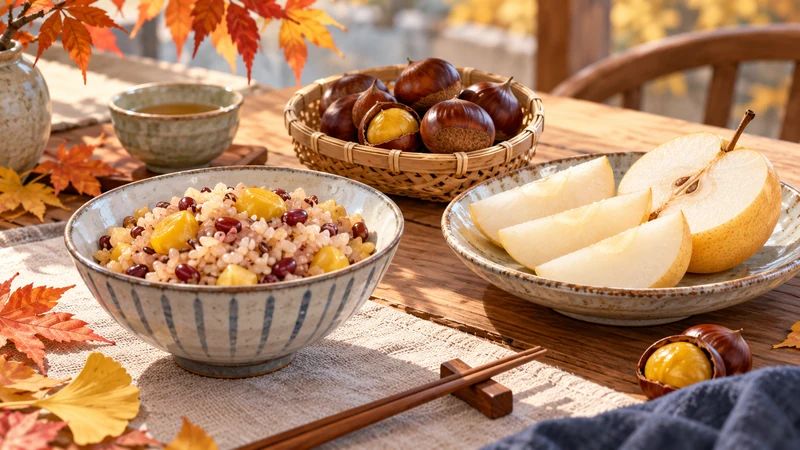
Autumn Equinox is an astronomical marker; dew and frost names also preserve seasonal observation language. None specifies a nationally required dish. Mid-Autumn Festival follows a lunar date, so mooncakes should be associated with that festival rather than automatically assigned to Autumn Equinox each year. Record festival date and term date separately when planning a seasonal table.
Dates below are for the Gregorian year 2026 in Hong Kong time (UTC+8), not fixed dates for every year. Solar longitude identifies the astronomical marker.
| Term | 2026 date, UTC+8 | Solar longitude |
|---|---|---|
| Beginning of Autumn (Liqiu) | 7 August | 135° |
| End of Heat (Chushu) | 23 August | 150° |
| White Dew (Bailu) | 7 September | 165° |
| Autumn Equinox (Qiufen) | 23 September | 180° |
| Cold Dew (Hanlu) | 8 October | 195° |
| Frost’s Descent (Shuangjiang) | 23 October | 210° |
No. It is a calendar marker; local weather may remain hot.
No. Mooncakes are associated with the lunar Mid-Autumn Festival, whose date must be checked separately.
The Liqiu account identifies an old Beijing meat-eating practice associated with tie qiubiao.
May is meteorological spring in China, but local weather ranges from cool northern conditions to…
Read More →
Understand winter in China by month and region, from snowy northeast cities to mild southern…
Read More →
China has no single monsoon month. Compare South China, the Yangtze Meiyu belt, North China,…
Read More →