
What Season Is May in China? Calendar and Regional Context
May is meteorological spring in China, but local weather ranges from cool northern conditions to…
Read More →Solar terms classroom activities can be organized into three stations: calendar reading, local observation and cultural source checking. Each station answers a different question, helping students avoid confusing a calculated date with a weather forecast or a family custom with a national rule.
Provide a sourced annual calendar and ask groups to find one term, its date, the preceding term and the following term. Have them write the year and calendar time zone. Explain that English names vary between translations, so students should compare sequence and Chinese names when available rather than assume two translated labels identify different events.
Source: Hong Kong Observatory: The 24 Solar Terms.

Use a potted plant, a photograph with a known place and date, or published weather records from one local station. Students list what they can see or read before offering an explanation. A short temperature record describes those days, not a long-term climate pattern. Keep instruments in safe locations and offer paper-based alternatives for accessibility.
Give students a short, teacher-selected source naming a place and food custom. Ask which community it describes and what it does not prove. A family interview can be offered as optional work with consent, clearly labeled as one household’s account. Do not use a generated image as evidence that a historical ceremony occurred.
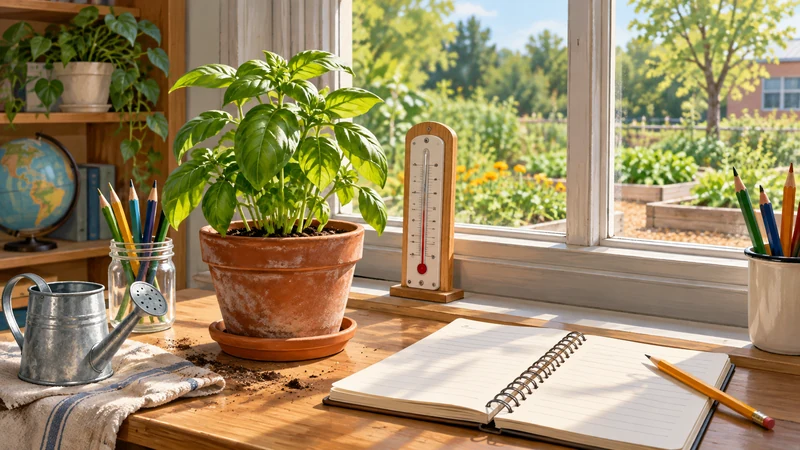
Groups produce a display with three distinct captions: calendar fact, local observation and cultural account. They then revise one overbroad sentence, such as changing a claim about all regions to the place actually named in the source. Teacher assessment can focus on correct sourcing and clear boundaries. These are proposed activities; UNESCO’s heritage entry supplies context rather than approval of this lesson design.
Source: UNESCO: The Twenty-Four Solar Terms.
Calendar reading, local observation and cultural source checking.
No. It can explain a topic, but a historical claim needs an appropriate source.
Separate calendar facts, local observations and sourced cultural accounts, and identify their limits.
May is meteorological spring in China, but local weather ranges from cool northern conditions to…
Read More →
Understand winter in China by month and region, from snowy northeast cities to mild southern…
Read More →
China has no single monsoon month. Compare South China, the Yangtze Meiyu belt, North China,…
Read More →