
What Season Is May in China? Calendar and Regional Context
May is meteorological spring in China, but local weather ranges from cool northern conditions to…
Read More →Winter Solstice (Dongzhi) foods are regional: northern Chinese accounts often mention dumplings, while rice balls and other rice preparations appear in southern customs. These are broad patterns with local and household exceptions, not two compulsory menus.
Dongzhi is the term at solar longitude 270°. In 2026 it falls on 22 December in Hong Kong time (UTC+8), according to the Hong Kong Observatory. It marks the Northern Hemisphere winter solstice; its December date is not the Southern Hemisphere’s winter solstice. It also does not identify the coldest local day.
Source: Hong Kong Observatory: The 24 Solar Terms; Hong Kong Observatory: 2026 calendar.
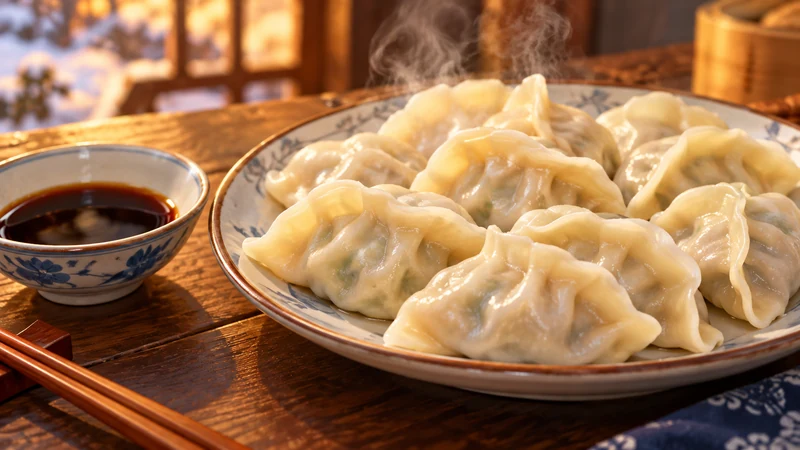
The Dongzhi customs page describes northern dumplings and wontons, southern rice dumplings and long noodles, and red-bean glutinous rice in Jiangnan. Its Fujian example includes making and sharing small rice balls. These examples provide more detail than a rigid claim that all northern people eat jiaozi and all southern people eat tangyuan.
Source: 12371.cn: Winter Solstice regional foods.
Jiaozi have a wrapper enclosing a filling and commonly have a crescent shape. Tangyuan are round glutinous-rice-flour balls, which may be plain or filled and may be served in different broths. The illustrations compare these forms; they do not recreate a named family ceremony. Do not confuse tangyuan with every regional food described as a rice dumpling.
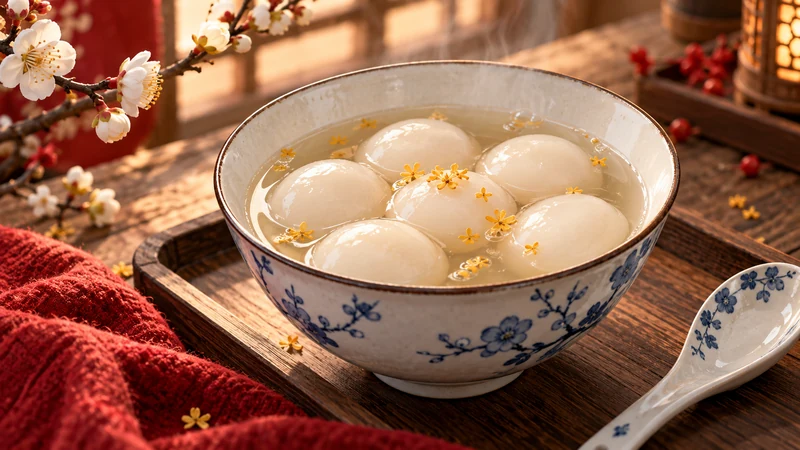
Sharing food can be part of a family gathering, but a particular symbolic explanation needs a source or a clearly identified family account. Stories about dumplings protecting ears are folklore rather than medical evidence. An ordinary bowl served during Dongzhi is food, not a guarantee of health or good fortune.
It is 22 December in Hong Kong time (UTC+8), at solar longitude 270°.
No. Southern regional accounts include several rice foods and noodles, and household practice varies.
No. Tangyuan are round glutinous-rice-flour balls; jiaozi have a filled wrapper.
May is meteorological spring in China, but local weather ranges from cool northern conditions to…
Read More →
Understand winter in China by month and region, from snowy northeast cities to mild southern…
Read More →
China has no single monsoon month. Compare South China, the Yangtze Meiyu belt, North China,…
Read More →